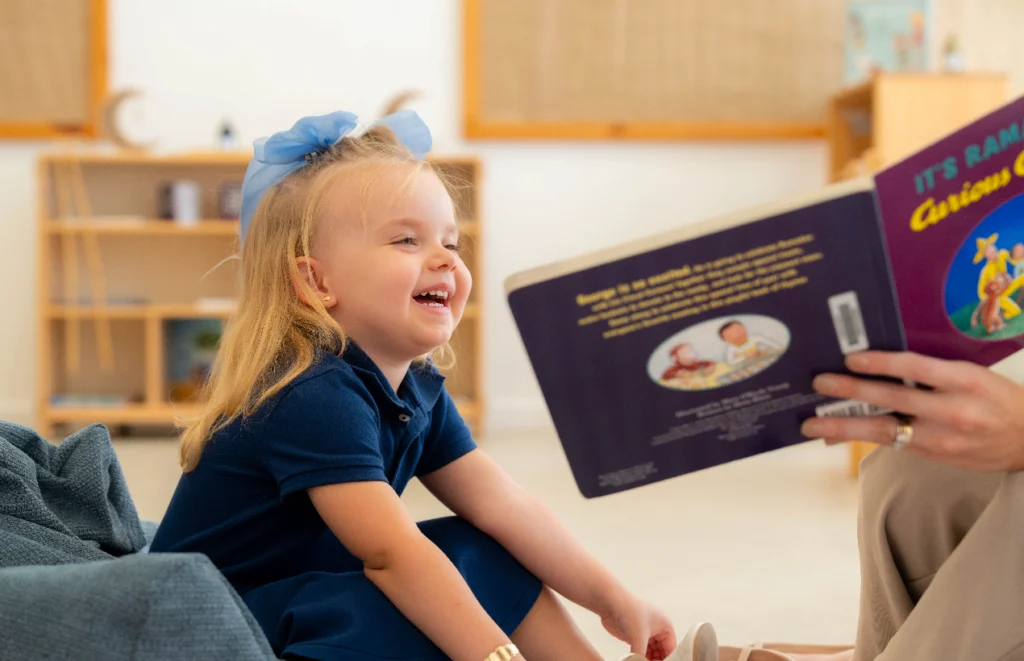

Arts subjects are often the first thing parents assume can be dropped when academic pressure rises. That instinct is understandable and usually wrong. Music and arts education in Dubai schools has become considerably more serious over the past decade, with specialist teaching, recognised qualifications, and external examinations available alongside the mainstream curriculum. Knowing what is actually on offer helps you judge a school properly and support a child who cares about it.
Why Music and Arts Education in Dubai Schools Matters
The case is not only cultural. Learning an instrument develops working memory, pattern recognition, and the discipline of sustained practice toward a distant goal. Drama builds spoken confidence and the ability to hold an audience, both of which surface later in interviews and presentations. Visual art teaches visual problem solving and iteration, which transfers directly into design, architecture, and engineering.
There is also a wellbeing argument that matters in an examination heavy system. A rehearsal or a studio session is one of the few points in the week where a student produces something rather than revises something.
How Music and Arts Education in Dubai Schools Is Structured
Provision usually sits in four layers, and schools vary enormously in how seriously they treat each.
1. The Timetabled Curriculum
In British curriculum schools, Art, Music, and often Drama are taught to all students in the primary years and through Key Stage 3. Time allocation tightens in Years 10 and 11, partly because UAE national mandatory subjects also occupy timetable space in Dubai private schools.
2. Qualifications at GCSE and A Level
Art and Design, Music, Drama, and Design Technology are all available as full qualifications. They are academically demanding rather than soft options, combining coursework portfolios, written examinations, and assessed performance.
3. Graded External Examinations
Graded music examinations from boards such as ABRSM and Trinity College London, along with speech and drama qualifications from LAMDA, are administered through registered centres across the UAE. These run independently of the school timetable and give students a portable, internationally recognised record of progress that universities and conservatoires understand. Many families combine them with school provision rather than choosing between the two.
4. Ensembles, Productions, and Exhibitions
Choirs, orchestras, bands, school productions, and exhibitions are where most students actually experience the subject. A school with a strong timetable but no performance culture is only doing half the job.
What Strong Music and Arts Education in Dubai Schools Looks Like
Facilities photograph well. What matters is harder to see on a tour.
1. Specialist Teachers
Ask whether Music, Art, and Drama are taught by subject specialists throughout, or by class teachers in the primary years. This single answer explains most of the difference in quality between schools.
2. Participation Rather Than Selection
Look at how many students perform or exhibit each year, not how good the top ensemble is. Strong music and arts education in Dubai schools reaches the average student, not only the talented few.
3. Continuity in Music and Arts Education in Dubai Schools
Provision that fades after Year 6 is common. Ask what a student who loves art in Year 4 will still have access to in Year 10, and whether pathways exist to portfolio preparation and higher education.
Concerns Parents Commonly Raise
Two questions come up repeatedly about music and arts education in Dubai schools. The first is whether arts subjects harm university prospects. They do not, provided the overall combination is coherent, and creative subjects are essential for art foundation courses, architecture, and design degrees. The second is whether rehearsal time costs revision time. In practice, students involved in structured activity often manage time better, because the commitment forces planning rather than drift.
Questions to Ask a School
When comparing private schools in Dubai, move past the facilities tour. Who teaches Music in the primary years? How many students take Art or Music at GCSE, and what were the outcomes? Are there ensembles for beginners as well as advanced players? Does the school host graded examinations or support students taking them elsewhere? Are peripatetic instrumental lessons available, and at what cost? Specific answers to these questions reveal how much music and arts education in Dubai schools is actually valued at that setting.
The Scholars Approach
At The Scholars School in Al Quoz, music and arts education in Dubai schools is treated as part of a full education rather than an enrichment extra. Specialist teaching, regular performance opportunities, and creative subjects offered as genuine options at qualification level give students a sustained route rather than an early exit. Our Student life programme is where much of this happens, since ensembles, productions, and exhibitions give students a reason to keep going when the timetable gets busier. Parents can read more on the Why the Scholars? page, and review entry requirements under Admission.
Final Thoughts
Music and arts education in Dubai schools is stronger and more structured than many parents assume, but the range between schools is wide. Judge provision by who teaches it, how many students take part, and whether a child can still pursue it at sixteen rather than only at six. Support the subject at home by treating practice as a normal commitment rather than an optional extra. Approached that way, music and arts education in Dubai schools becomes a durable part of your child’s education rather than the first thing to disappear.
Frequently Asked Questions
What subjects are taught in schools in Dubai?
Alongside English, Mathematics, and Science, students study humanities, languages, and a range of creative and technical subjects including Art and Design, Music, Drama, Design Technology, Computer Science, and Physical Education. All private schools also deliver the UAE national mandatory subjects, which include Arabic, Islamic Education for Muslim students, and UAE Social Studies or Moral, Social and Cultural Studies. The exact mix varies by curriculum and by year group.
Can I study music in Dubai?
Yes, at several levels. Music is taught within the school curriculum, offered as a GCSE and A Level qualification in many British curriculum schools, and supported by graded external examinations administered locally. Beyond school there are private teachers, community ensembles, and specialist music centres across the emirate. Higher education options in music within the UAE are more limited than in the UK, so students aiming at a conservatoire usually apply abroad.
Is music part of the school curriculum?
Yes. In British curriculum schools, Music is a taught subject throughout the primary years and into Key Stage 3, after which it becomes optional at GCSE. How much time it receives, and whether it is taught by a specialist, differs considerably between schools. Ask about weekly timetabled minutes and who delivers the lessons rather than assuming provision is equivalent everywhere.